
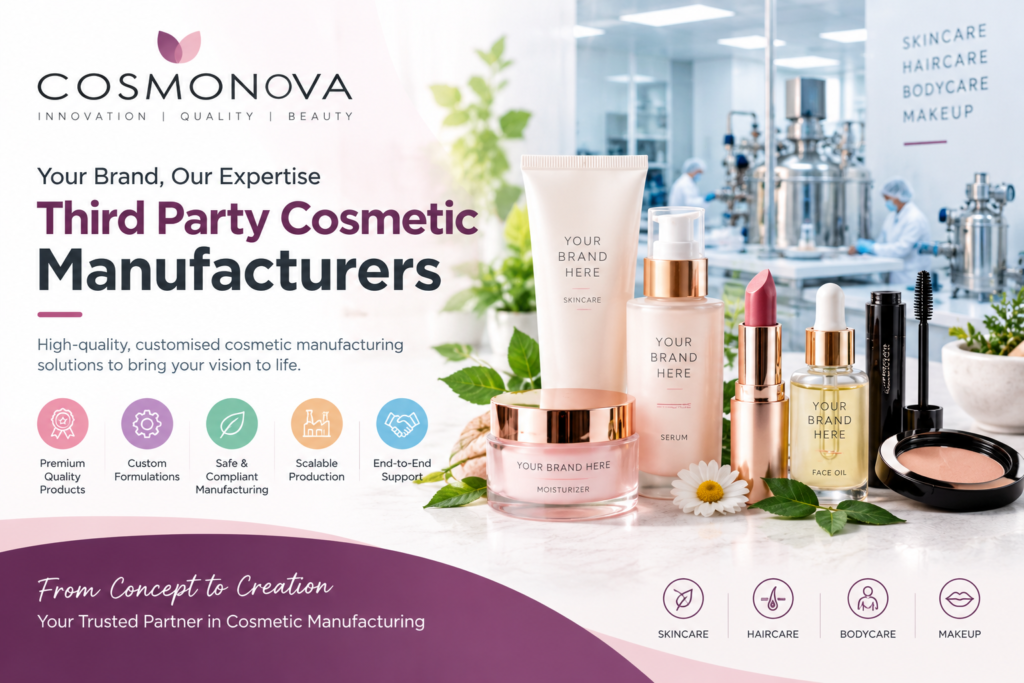
The beauty and personal care industry continues to offer opportunities for entrepreneurs, startups and established businesses. From skincare creams and face serums to shampoos, lotions and other personal care products, customers are looking for products that suit their individual needs. For businesses planning to launch or expand a beauty brand, working with reliable third party cosmetic manufacturers can simplify the product development and manufacturing process.
Third-party manufacturing allows businesses to work with an experienced manufacturer to produce cosmetic products under their own brand name. Instead of establishing their own manufacturing facility, businesses can focus on branding, marketing, distribution and customer relationships while their manufacturing partner manages agreed production activities.
What Are Third Party Cosmetic Manufacturers?
Third party cosmetic manufacturers are companies that manufacture beauty and personal care products for other businesses. These products are marketed under the client’s brand name and may be developed according to agreed formulations, packaging requirements and product specifications.
This model can be suitable for beauty startups, salon owners, cosmetic retailers, distributors and established skincare companies.
Depending on the manufacturer’s capabilities, services may include formulation development, ingredient selection, product testing, bulk production, filling, labelling and packaging. The exact services available vary by manufacturer and should be confirmed before entering into an agreement.
Benefits of Working with Third Party Cosmetic Manufacturers
Choosing the right manufacturing partner can help businesses manage product development more efficiently.
1. Lower Investment in Manufacturing Infrastructure
Establishing a cosmetic manufacturing facility requires investment in equipment, production space, trained personnel and quality management systems. Third-party manufacturing can reduce the need for a business to establish all these resources independently.
This allows entrepreneurs to direct more attention towards product positioning, sales and brand development.
2. Customised Cosmetic Formulations
Every beauty brand has its own target audience and product vision. Depending on the manufacturer’s capabilities, businesses may be able to request customised formulations, textures, fragrances and product specifications.
For example, a skincare brand may wish to develop moisturisers, facial cleansers, face serums or body lotions suited to its intended market.
Formulation choices should consider ingredient compatibility, product stability, safety and applicable cosmetic regulations.
3. A Range of Beauty Products
A suitable manufacturing partner may support the production of different product categories, including:
- Skincare creams, lotions and moisturisers
- Face serums and facial care products
- Shampoos and hair conditioners
- Body washes and body care products
- Cleansers and selected personal care products
- Other cosmetic products, subject to manufacturing capabilities
Working with one partner for multiple product categories may help businesses coordinate their product range and packaging requirements.
4. Support with Packaging and Branding
Packaging plays an important role in how customers perceive a cosmetic product. Bottles, jars, tubes, labels and outer packaging should suit the product formulation and intended market.
Third-party manufacturers may offer packaging coordination and filling services. Businesses should confirm whether their chosen partner supports custom packaging, label design requirements and different order quantities.
Clear branding and accurate product information can help create a consistent brand identity.
5. Flexible Business Growth
Third-party manufacturing can offer a practical route for businesses looking to expand their product range without immediately investing in their own factory.
However, minimum order quantities, production capacity, lead times and pricing differ between suppliers. It is important to discuss these details before finalising a production plan.
How to Choose the Right Cosmetic Manufacturing Partner
Selecting the right manufacturer is an important business decision. Consider these factors before choosing a supplier.
Manufacturing experience: Review the company’s experience with your required cosmetic category and product type.
Quality assurance: Ask about raw material checks, production controls, batch traceability, stability testing and relevant quality systems.
Regulatory compliance: Confirm that products, ingredient declarations, labels and manufacturing processes meet the requirements of the markets where you intend to sell.
Customisation options: Discuss formulation requirements, fragrance preferences, packaging styles and branding support.
Order quantities and pricing: Understand minimum order quantities, sample costs, payment terms, production timelines and shipping arrangements.
Communication: Choose a partner that explains the manufacturing process clearly and responds to questions about specifications and production progress.
Understanding Quality and Safety in Cosmetic Manufacturing
Cosmetic quality is essential for protecting consumers and building long-term trust. Before a product reaches the market, its formulation and packaging should be suitable for the intended use.
Depending on the product, manufacturers and brand owners may need to consider microbiological quality, stability, packaging compatibility and appropriate safety assessments. Product claims should be supported by suitable evidence, and labels should accurately describe the ingredients and intended use.
Businesses selling cosmetics internationally should also check the relevant regulatory requirements for each destination market. Working with a knowledgeable manufacturing partner can help clarify responsibilities, but brands should independently verify their compliance obligations.
Why Consider Cosmonova for Cosmetic Manufacturing?
Cosmonova is a beauty and personal care business whose manufacturing-related services and capabilities can be explored through its website. If you are planning to launch a new cosmetic range or expand an existing brand, contact the company to discuss your product requirements.
Before proceeding, enquire about available product categories, formulation options, quality processes, custom packaging, minimum order quantities and production timelines. These details will help you determine whether the company’s capabilities align with your business goals.
Visit Cosmonova India to learn more and enquire about suitable cosmetic product solutions.
Conclusion
Working with reliable third party cosmetic manufacturers can help beauty businesses bring products to market without building their own manufacturing infrastructure. From formulation and production to packaging coordination, the right partner can support a more organised product development process.
By reviewing manufacturing capabilities, quality procedures, regulatory requirements and commercial terms, businesses can make informed decisions and build a strong foundation for long-term growth. Whether you are launching your first skincare product or expanding an established beauty range, careful manufacturer selection is an important step towards developing a trusted cosmetic brand.