
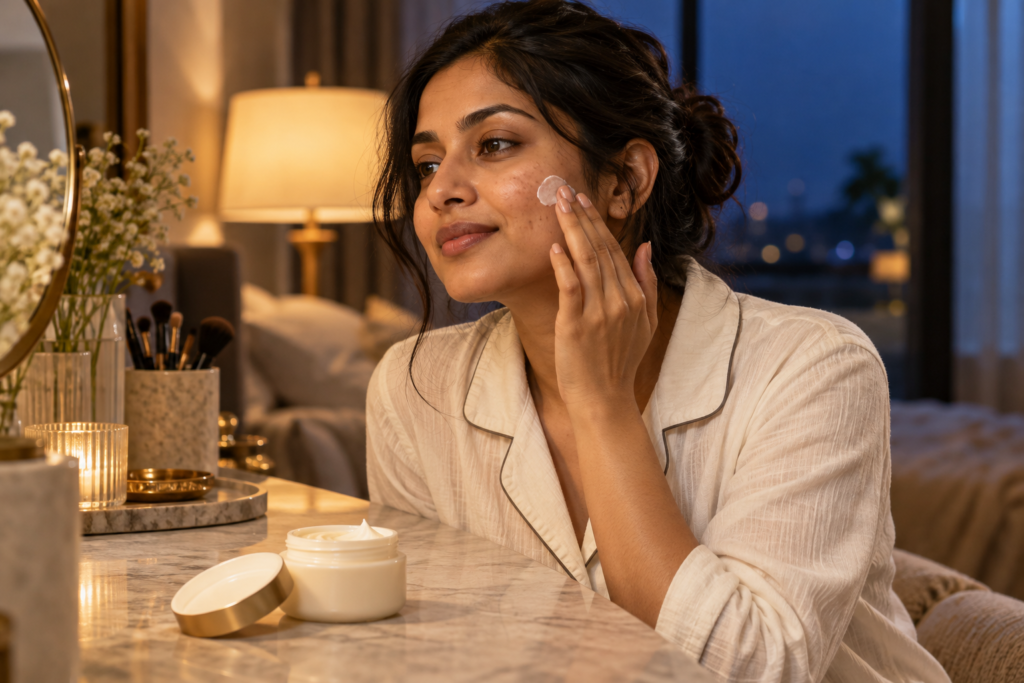
Finding the best night cream for pigmentation and dark spots starts with understanding your skin. Uneven patches, post-acne marks and sun-related discolouration can look similar, but their causes and treatment needs may differ. A suitable cream should combine relevant ingredients with a texture your skin comfortably tolerates.
Instead of choosing products that promise overnight transformation, focus on a consistent routine, realistic expectations and daily sun protection. This guide explains what to consider when selecting a night cream for a more even-looking complexion.
Understand What Causes Dark Spots
Pigmentation develops when areas of skin produce excess melanin, the pigment responsible for skin colour. Common triggers include inflammation after acne, irritation, sun exposure and hormonal changes. Understanding the trigger helps you choose a more appropriate approach.
For example, continuing breakouts may create new marks while older ones fade. Addressing the underlying concern matters alongside using a pigmentation product. Persistent or unexplained patches should be assessed by a dermatologist rather than treated through repeated product changes.
What Should a Night Cream Offer?
A useful night cream should fit your skin type, existing routine and specific concern. Compare the complete ingredient list, usage directions and manufacturer information before buying.
Look for clearly explained benefits rather than vague promises of instant fairness. Improving the appearance of uneven pigmentation does not require changing your natural skin colour. Also, remember that “night cream” describes when a product is intended for use; the name alone does not establish its effectiveness against dark spots.
Ingredients Worth Considering
Azelaic acid: This ingredient can help address hyperpigmentation, including marks associated with acne. Its suitability depends on the formulation and your skin’s tolerance. Some people experience stinging or dryness, so introduce it cautiously.
Retinol: A vitamin A derivative, retinol can improve uneven pigmentation and texture. However, it can irritate sensitive skin. Begin gradually according to product instructions, and avoid retinoids during pregnancy. Ask a dermatologist whether they suit your circumstances.
Other targeted ingredients: Vitamin C, kojic acid and glycolic acid are also used in products for uneven tone. They are options to evaluate, rather than ingredients everyone needs together.
Choosing several strong ingredients at once can make a routine difficult to tolerate. A carefully selected product is often easier to assess than multiple new treatments introduced simultaneously.
Match the Texture to Your Skin
For dry skin, a richer cream may feel comfortable and help reduce the sensation of tightness. For oily skin, consider a lighter lotion or gel-cream that settles without feeling excessively heavy.
If your skin reacts easily, a fragrance-free option may be preferable. Check for ingredients you already know cause problems. Acne-prone users can consider products labelled non-comedogenic, while remembering that individual reactions vary.
Packaging also matters practically. Choose a format you can use hygienically and store according to the label. Check the expiry date and avoid products with missing ingredient or manufacturer information.
Build a Simple Evening Routine
Start by removing makeup and sunscreen, then cleanse gently. Apply your night cream as directed, avoiding areas the label excludes.
Introduce one new product at a time. Test it on a small area before wider use, although this cannot guarantee that irritation will never occur. If you already use prescription skincare, check with your clinician before adding another active product.
Avoid increasing the amount in an attempt to speed up results. Stop using a product that causes persistent burning, itching or a rash. Irritation itself can contribute to dark marks, particularly in darker skin tones. aad.org
Support Your Routine with Daytime Protection
An evening routine needs daytime sun protection. Use broad-spectrum SPF 30 or higher, and reapply approximately every two hours outdoors and after swimming or sweating. Shade and protective clothing also help.
For pigmentation concerns, tinted sunscreen containing iron oxides can offer additional protection against visible light.
Allow Time and Review Progress
Pigmentation does not disappear overnight. Improvement may take months, depending on its cause, depth and ongoing triggers.
Take occasional photographs in similar lighting to judge changes more fairly. Record when you started a product and any reactions. If progress remains disappointing, seek a professional review instead of continually adding stronger products.
Explore Skincare Development with Cosmonova
Cosmonova provides customised skincare manufacturing and private-label services for businesses. Brands planning a night cream can discuss formulation goals, preferred textures and packaging requirements with its team.
Claims about reducing pigmentation should be supported by evidence for the finished formulation. Visit Cosmonova to discuss your skincare product development requirements.